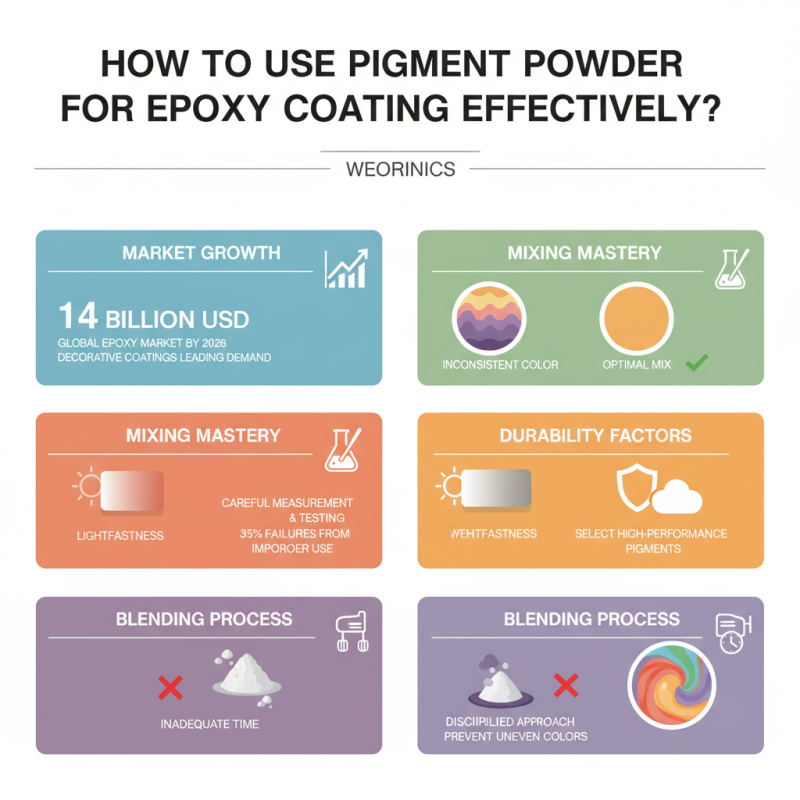
Lately, I've noticed that using Pigment Powder in epoxy has becoming quite a buzz in the coatings world. According to a recent report from MarketsandMarkets, the global epoxy resin market might hit around $14 billion by 2026 — and it’s pretty clear that decorative coatings are driving most of the demand. This really underscores just how important it is to use high-quality pigment powders that not only look great but also hold up over time in epoxy projects.
When you're applying Pigment Powder for epoxy, getting your mix just right is super important. Honestly, a lot of folks struggle to nail that perfect color and opacity. Industry pros often say that taking your time with careful measuring and some testing can really make a big difference. Funny enough, a study by ICCA revealed that about 35% of coating failures are tied back to improper pigmentation — yes, pigment mistakes are more common than you'd think!
And there's another thing people tend to overlook — lightfastness and weather resistance. Some pigments just fade when they’re out in the sun, which isn't great if you want your coating to last. So, choosing a high-quality Epoxy Resin Pigment Powder really matters. But honestly, even then, there’s always room to get better at blending. Common slip-ups like not mixing long enough can cause uneven colors and lower the overall quality. It’s maybe a small thing, but paying closer attention to these details can really boost the final result and make your work stand out more.
Pigment powder is a versatile coloring agent used in epoxy coatings. Understanding its properties is crucial for achieving desirable results. Pigment powder can enhance both the aesthetics and performance of epoxy. For example, certain types can improve UV resistance. This ensures long-lasting color and protection against fading.
When working with Pigment Powder For Epoxy, consider particle size. Fine particles disperse better in the resin, leading to a smoother finish. However, larger particles can create texture, which may not always be ideal. Research indicates that optimal dispersion of pigment powder is essential for uniform color and strength. Uneven mixing can lead to streaks and blotches, affecting the overall quality.
Another crucial factor is compatibility with epoxy resin. Not all pigment powders work well with every type of resin. Some may clump or separate over time. Selecting the right type is vital. Certain reports suggest that using 10% to 20% pigment powder for epoxy tends to yield the best results. Still, these percentages should be adjusted based on specific formulas and desired effects. Experimenting with different combinations is necessary for perfecting your project.
When selecting the right pigment powder for your epoxy project, consider the finish you desire. Different pigments yield unique textures and appearances. For a vibrant finish, choose high-quality, finely milled pigments. They blend better and offer uniform color.
Think about the environment where your epoxy will be used. Some pigments work well indoors, while others are better for outdoor use. Outdoor projects may require UV-resistant pigment powders. These help maintain color integrity over time.
Tips: Test small batches before committing. It helps you see how the colors interact with the resin. Adjust the pigment percentage based on your results. This trial and error process can be frustrating but is essential for a successful outcome. Remember, your first choice may not always be the best one. Be open to exploring different options and learning from your experiences.
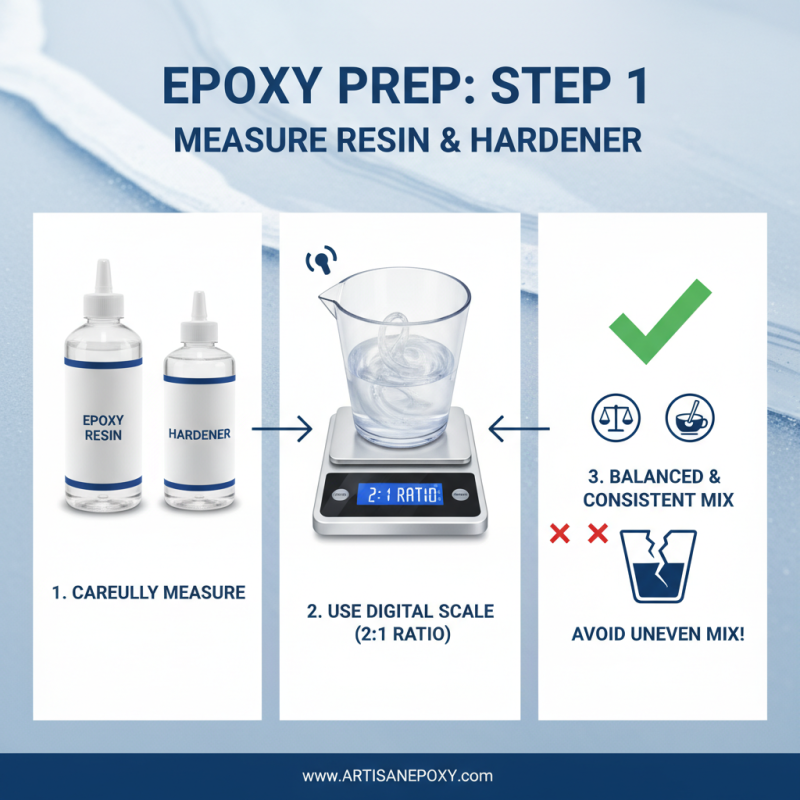
When preparing the epoxy mixture for pigment addition, the first step is to measure the resin and hardener carefully. Use a digital scale for accuracy. Typically, a 2:1 ratio is effective. Mixing too much resin or hardener can affect the final outcome. You want a balanced consistent mixture.
After measuring, pour the resin into a clean container. Gradually add the hardener. Stir slowly to minimize bubbles. Aim for a uniform blend. Pay attention to the texture while mixing. If it feels thick or uneven, it might require more stirring.
Tips: Use a mixing stick to scrape the sides of the container during stirring. This ensures all components blend well. Adding a small amount of pigment initially is wise. It allows you to adjust the color easily. An overly strong hue can overpower the epoxy’s natural charm. Be careful not to rush this stage; impatience can lead to uneven color distribution.
While adding pigment, remember to wear protective gear. Accidental spills can be hard to clean. Don’t hesitate if your colors don’t match expectations. Adapt and adjust as needed. It’s all part of the creative process. Embrace some trial and error for stunning results.
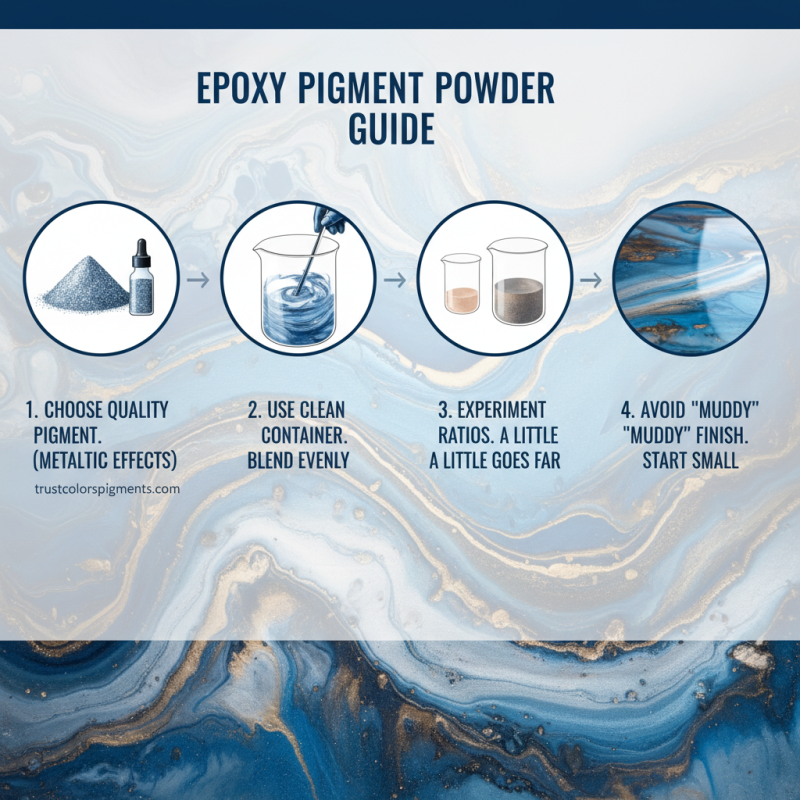
Incorporating pigment powder into epoxy can enhance your projects significantly. Start by choosing high-quality pigment. Metallic Pigment Powder For Epoxy offers stunning effects. When mixing, use a clean container. This ensures the colors blend evenly. Experiment with different ratios. A little goes a long way. You might find that too much pigment could muddy the finish.
To achieve the best results, stir gently but thoroughly. Avoid bubbles, as they can disrupt the appearance. Temperature plays a role, too. Warmer epoxy allows for better mixing. For intricate designs, apply layers. This adds depth and dimension. Remember, perfection is not guaranteed every time. Some attempts may yield unexpected results.
Plan your workspace efficiently. Have all materials ready. Cleanup should not be an afterthought. Protect surrounding surfaces from spills. Sometimes, you might need to adjust pigment amounts or technique. Keep a journal of what works best for each project. Reflecting on your process can lead to improvement in future applications.
Applying pigment powder in epoxy coatings can transform the aesthetic and durability of surfaces. The key application methods vary, and each has its nuances. One popular method is the direct mixing of pigment powder into the epoxy resin before application. This method ensures an even distribution of color. However, achieving the perfect shade requires precision. According to the Global Coatings Association, an increasing number of surfaces benefit from this practice, with a 15% rise in usage globally.
Another effective method involves creating a pigment paste. Here, pigment powder is mixed with a small amount of epoxy and a solvent. This paste can then be added to the resin. This technique allows for controlled color adjustments. Yet, it can be tricky to master. Inconsistent mixing can lead to color variations. A study by the Coating and Ink Manufacturers Association highlighted that as much as 20% of users face challenges with color consistency.
For a layered color effect, spraying techniques can be used. This method creates depth and texture. However, proper equipment and ventilation are essential. Without them, the outcome could be less than ideal. Minor overspray can disrupt clean lines. As studies suggest, achieving a flawless finish requires practice and patience. The art of applying pigment powder in epoxy coatings is as much about technique as it is about creativity.
When working on an epoxy coating project, curing and finishing the epoxy coated surface is crucial. Proper curing ensures the longevity and strength of your work. Applying a thin layer of epoxy helps to avoid bubbles and uneven surfaces. The right environment is also vital. A dust-free space, with mild temperatures, aids in proper curing.
Tips: Always check the humidity levels before starting. Higher humidity can affect the curing process negatively. Consider using a brush or roller for an even finish. This method can help manage the consistency of the epoxy layer.
After curing, finishing is your next step. Light sanding can smooth out any imperfections. Be cautious not to over-sand, which might damage the surface. Applying a final coat can enhance the look and durability. If using China Epoxy Resin Pigment Powder, ensure it's thoroughly mixed for a consistent color.
Remember, mistakes can lead to learnings. It’s okay if the results aren't perfect at first. Document your process to improve with each project.
Using pigment powder for epoxy coatings can yield stunning results, but common mistakes can ruin your project. One major mistake is poor mixing. According to a study by the Epoxy Resin Association, improper mixing reduces color uniformity by up to 50%. This leads to blotchy finishes that look unprofessional. Take time to mix thoroughly, ensuring the pigment is fully incorporated into the resin.
Another common error involves the application technique. Many forget that application should be done in thin layers. Thick layers often trap air bubbles, compromising aesthetics. Industry reports indicate that bubbles can reduce the strength of the coating by nearly 30%. Use a heat gun or torch to eliminate these bubbles. When using Wholesale Epoxy Resin Pigment Powder, always apply in controlled environments. Temperature and humidity can affect the drying process, leading to unexpected results.
| Mistake | Description | Consequence | Solution |
|---|---|---|---|
| Incorrect Pigment Ratio | Using too much or too little pigment powder. | Can lead to a color that is too bold or too faint. | Follow manufacturer's guidelines for pigment-to-resin ratio. |
| Skipping Mixing Steps | Not thoroughly mixing pigment with resin before application. | Results in uneven color distribution. | Ensure thorough mixing for an even color. |
| Ignoring Temperature Conditions | Applying in inappropriate temperature conditions. | Can delay curing time or cause bubbles. | Check ambient temperature before application. |
| Using Below Quality Pigments | Using low-quality or incompatible pigment powders. | Can lead to fading or chipping. | Invest in high-quality, compatible pigments. |
| Neglecting Safety Precautions | Not using proper safety gear while handling pigments. | Inhalation hazards or skin irritation. | Always wear protective gear. |
Infrared fluorescent pigment IR980nm is revolutionizing various sectors of modern industry due to its unique properties and applications. Comprising primarily of rare earth inorganic substances, this non-toxic and non-radioactive pigment is distinct in that it remains colorless and transparent when viewed under sunlight or daylight. This characteristic allows it to be seamlessly integrated into a variety of products without altering their visual aesthetic in normal lighting conditions.
The true magic of IR980nm fluorescent pigment emerges when exposed to specific infrared light within the range of 950 to 1000 nm, with a peak at 980 nm. Under such conditions, the pigment displays a vibrant and dazzling light that is not visible to the naked eye in standard lighting conditions. This property not only enhances the visual appeal of products but also opens doors for innovative applications in security features, automotive coatings, and additive manufacturing. Industries are increasingly exploring these pigments for their ability to provide distinctive identification markers, boosting both safety and creativity in product design.
: This product aims to improve everyday tasks and enhance convenience. It simplifies processes for users.
Usage frequency depends on individual needs. Most people suggest daily application for better results.
Some users report minor discomfort. It’s essential to pay attention to your body’s reactions.
Yes, it can often complement other products. However, compatibility varies, and some combinations may not work.
Not everyone experiences immediate change. Reflection on your usage habits may help improve outcomes.
Many sellers offer a satisfaction guarantee. It varies; read the terms before purchasing.
Yes, but start with a patch test. Monitor for any irritation, as reactions can happen.
Keep it in a cool, dry place. Avoid direct sunlight to maintain product integrity.
Don’t stress if you miss a session. Just continue with your routine the next time.
Generally, there is no strict age limit. However, evaluate suitability based on individual circumstances.
Using pigment powder for epoxy can significantly enhance the aesthetic appeal and performance of your coatings. This article thoroughly explores the properties of pigment powders and guides readers in selecting the appropriate type for their specific epoxy projects. Preparation for mixing is crucial, so understanding how to properly prepare the epoxy mixture is emphasized before the incorporation of pigment powder.
Techniques for adding pigment powder and applying the epoxy coating are detailed to ensure even distribution and optimal results. The curing and finishing processes are also discussed to help achieve a durable and visually pleasing surface. Additionally, common mistakes are outlined to aid readers in avoiding pitfalls while using pigment powder for epoxy, ensuring a successful application and longevity of the finish.